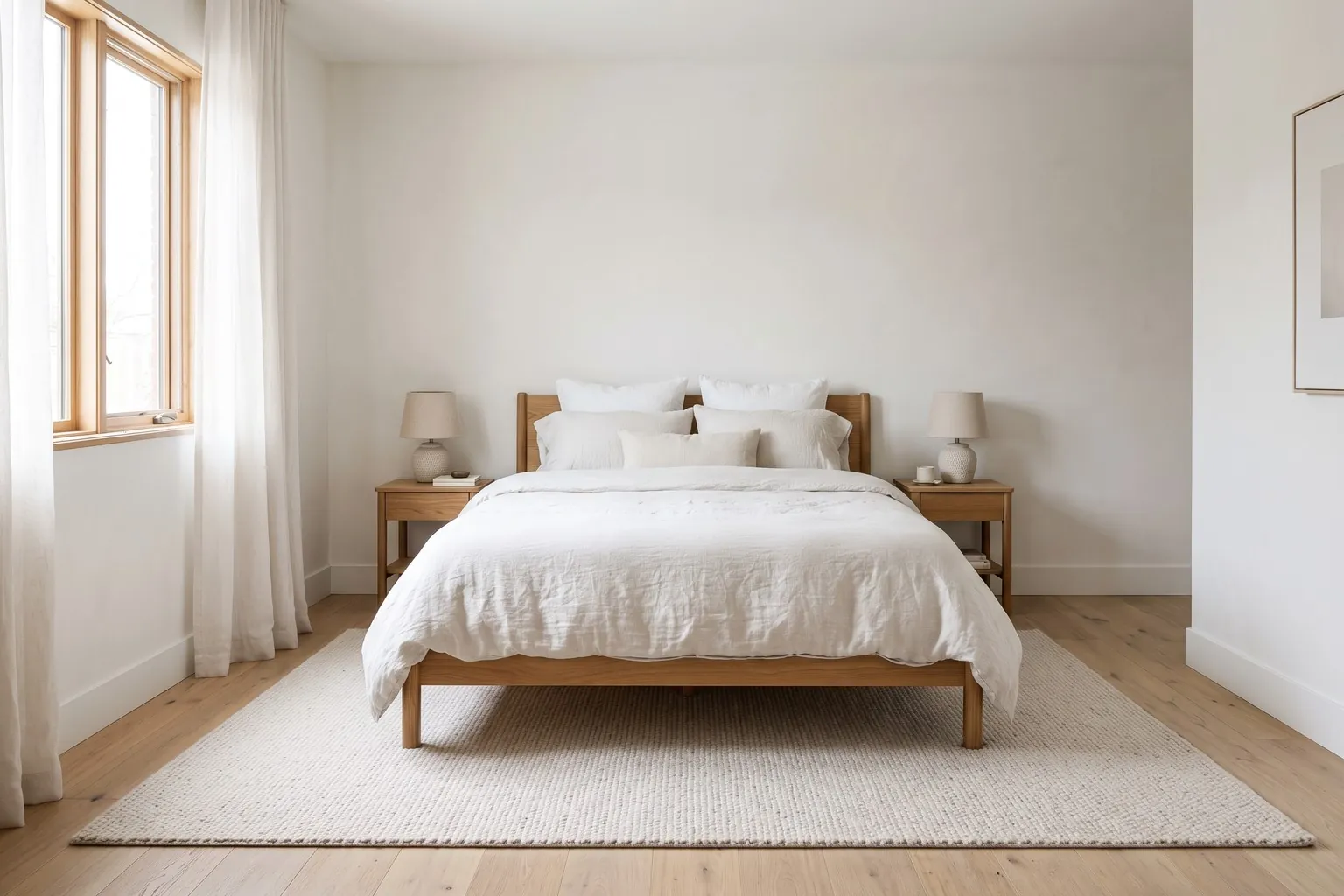
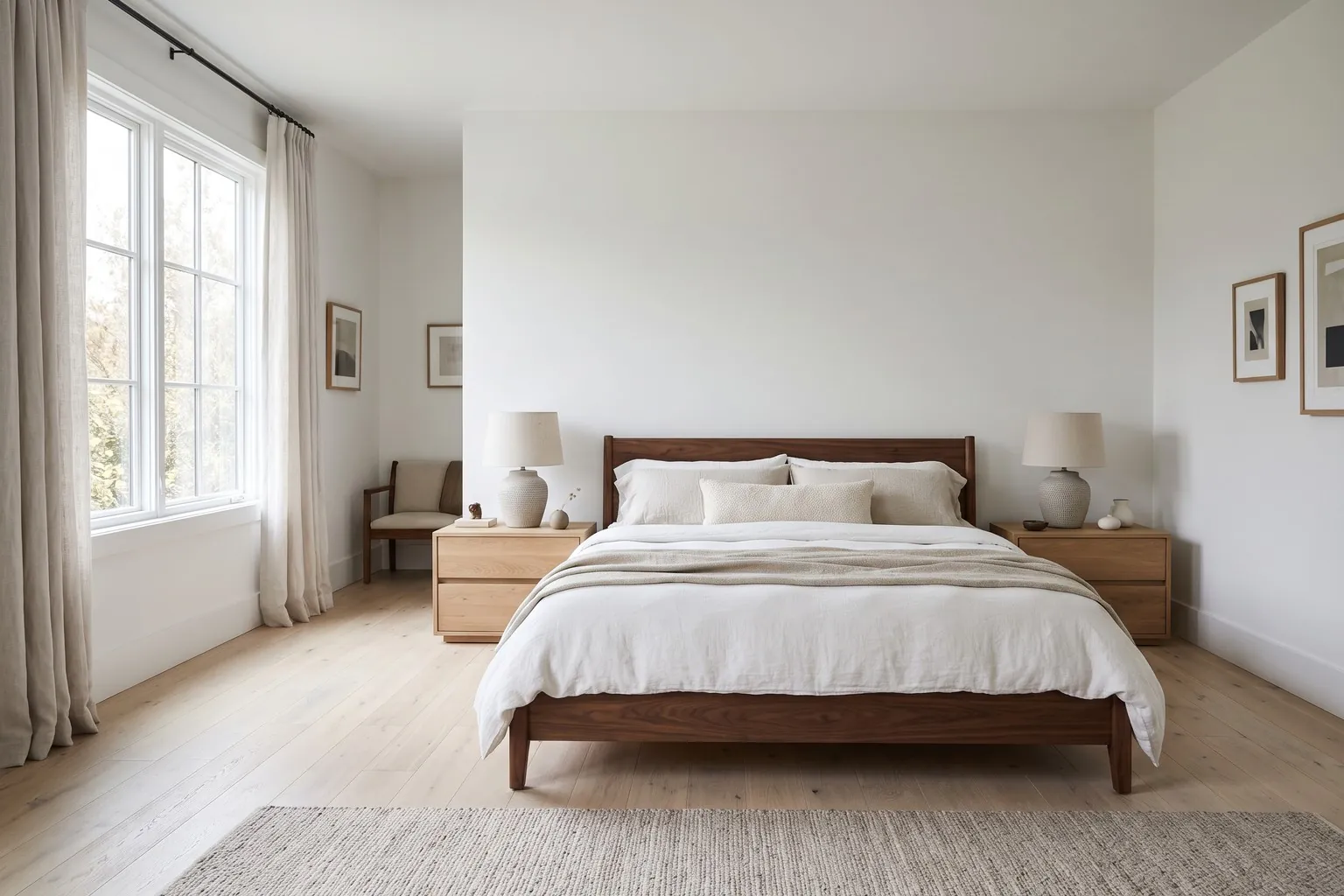
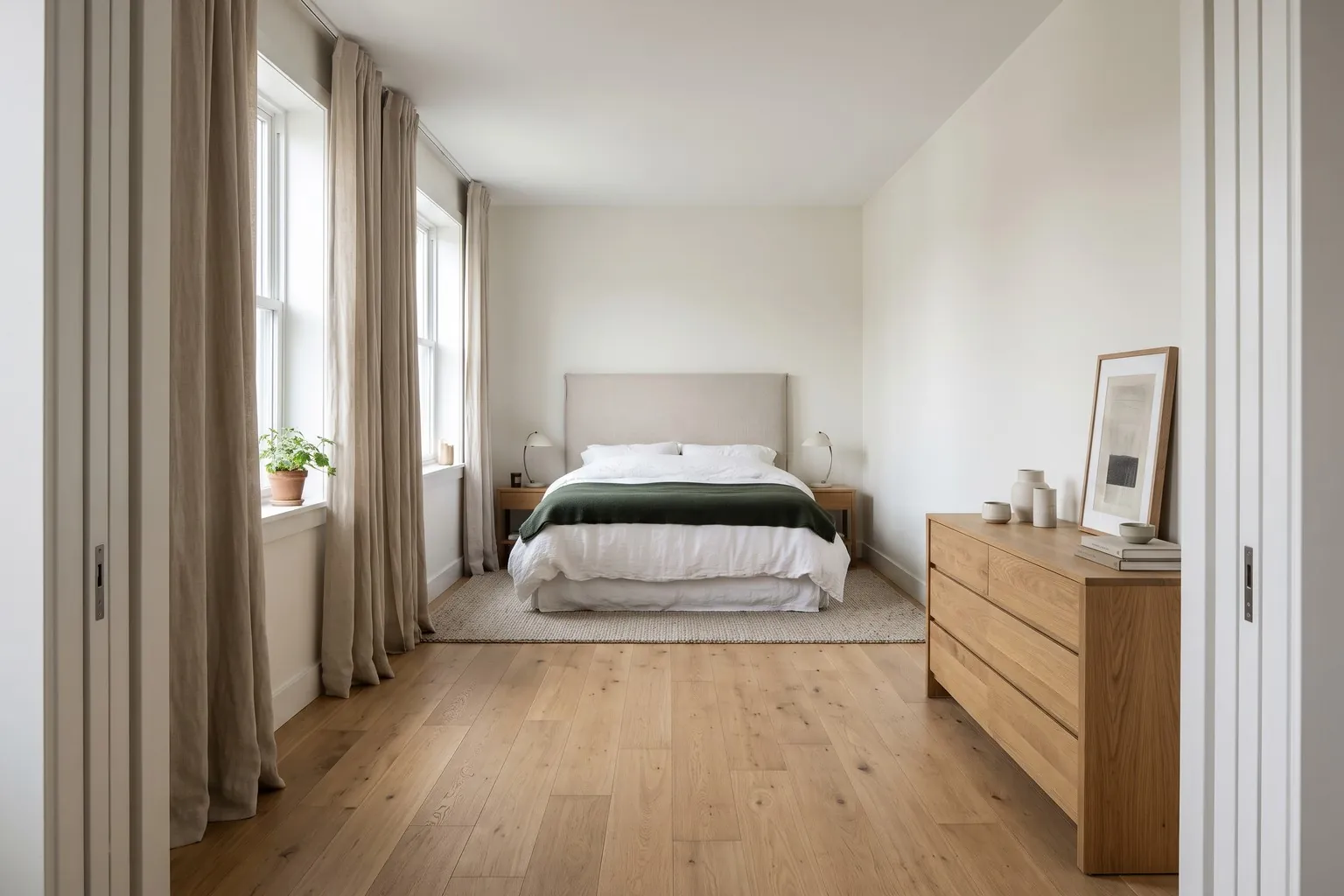
Full vs queen: 6 inches of width, 5 inches of length, and who needs them
A full is 54 by 75 inches and a queen 60 by 80. For two sleepers that is 27 inches each against 30, and 5 more inches of length. Room sums for both beds.
The short answer
- A full is 54 inches wide and 75 inches long. A queen is 60 inches wide and 80 inches long.
- For two sleepers that is 27 inches each in a full and 30 inches each in a queen.
- The queen is 5 inches longer. The Sleep Foundation suggests at least 80 inches of length for anyone over six feet, and only the queen has it.
- The queen needs 6 more inches of wall: 9 feet with 24 inches clear on each side, against 8 feet 6 inches for a full.
- Saatva puts a full at about 10 to 15 percent less than a queen.
In this guide
Full or queen is the decision most first time buyers face, and it usually gets made on the wrong number. People compare the widths, find 6 inches, and wonder whether 6 inches is worth paying for.
The width is the smaller half of the difference. The queen is also 5 inches longer, and for anyone tall that is the number that decides. Here are both, and the room each bed takes.
The two sizes, side by side
| Full | Queen | |
|---|---|---|
| Width | 54 in (4 ft 6 in) | 60 in (5 ft) |
| Length | 75 in (6 ft 3 in) | 80 in (6 ft 8 in) |
| Surface | 4,050 sq in | 4,800 sq in |
| Width per sleeper, for two | 27 in | 30 in |
The dimensions are the ones the Sleep Foundation and Saatva publish, and the surfaces are the Sleep Foundation's. The Better Sleep Council and Casper list the full at 53 inches wide, which is why the Council describes a queen as 7 inches wider and 5 inches longer than a full.
In surface, the queen has 750 square inches more than the full, which is about 18 percent. About two thirds of that comes from the extra width and a third from the extra length.
A full is also called a double. The two names mean the same mattress.
The width, for two
Two people in a full have 27 inches each, by the Better Sleep Council's figure. In a queen they have 30.
Three inches does not sound like much, and the sources treat it as the line between a squeeze and a bed for two.
- The Better Sleep Council calls the full a tight fit for two.
- The Sleep Foundation says a full could accommodate a couple in a pinch.
- Casper, counting from a 53 inch full, gives 26.5 inches each and says a queen gives each sleeper about 3.5 inches more.
For comparison, a twin mattress is 38 inches wide. Neither bed gives two adults the width each would have alone, and the full gives each about 70 percent of it.
The width, for one
For a single sleeper the sum reverses. A full is 54 inches of mattress for one person, which is already 16 inches more than a twin. The queen's extra 6 inches matter much less.
This is why the sources recommend the full the way they do: a single sleeper and teenagers, says the Better Sleep Council. Solo sleepers, growing kids and small apartments, says Saatva. Single adults under six feet, says the Sleep Foundation.
That last condition leads to the number that matters more.
The length
A full is 75 inches long: 6 feet 3 inches. A queen is 80 inches: 6 feet 8 inches.
The Sleep Foundation's rule is that a sleeper under six feet usually has enough legroom on any size, and that a sleeper over six feet should look for at least 80 inches of length. The Better Sleep Council says plainly that the twin and the full are too short for some adults.
In inches: a sleeper exactly six feet tall measures 72 inches. A full leaves 3 inches of mattress to share between the pillow end and the feet. A queen leaves 8.
So for a tall person, sleeping alone or not, the choice is already made. The full is too short and the queen is not. If the room cannot take a queen, the bed to look at for one tall sleeper is a twin XL, which is 38 by 80 inches.
Choose by the sleeper
| Who sleeps in it | Look at |
|---|---|
| One adult under six feet | Full, or queen if the room allows |
| One adult over six feet | Queen |
| A teenager who is still growing | Queen, or a twin XL in a small room |
| Two adults, every night | Queen |
| Two adults, now and then | Full, in a pinch |
| Guests | Queen for couples, full for single guests |
The guest room is where the sources split. Saatva calls the queen the best size for a guest bedroom. Casper lists guest rooms among the uses of a full. Both are right for different guests: a couple staying a week wants the queen, and a single visitor is comfortable in a full that leaves the room usable as an office.
Choose by the room
The published minimum rooms are closer than the beds.
| Source | Full | Queen |
|---|---|---|
| Saatva | 10 by 10 ft | 10 by 10 ft |
| Casper | 9 by 11 ft | 10 by 10 ft, or 10 by 12 ft for comfort |
| Purple | 9.5 by 10.5 ft | 10 by 10 ft |
The floor around the bed is what those rooms protect. The Sleep Foundation suggests about 24 inches of space on each side of the bed, and Purple says to allow 2 to 3 feet around each side and the foot.
With 24 inches on each side and at the foot, by our own sums:
| Full | Queen | |
|---|---|---|
| Wall needed, both sides open | 102 in (8 ft 6) | 108 in (9 ft) |
| Wall needed, one side against a wall | 78 in (6 ft 6) | 84 in (7 ft) |
| Depth needed from the head wall | 99 in (8 ft 3) | 104 in (8 ft 8) |
And here is what four rooms leave around each mattress, with the head of the bed against a wall and the bed centered.
| Room | Wall the bed is on | Full: each side, foot | Queen: each side, foot |
|---|---|---|---|
| 8 by 10 ft | 8 ft | 21 in, 45 in | 18 in, 40 in |
| 9 by 10 ft | 9 ft | 27 in, 45 in | 24 in, 40 in |
| 10 by 10 ft | 10 ft | 33 in, 45 in | 30 in, 40 in |
| 10 by 12 ft | 10 ft | 33 in, 69 in | 30 in, 64 in |
From 9 feet of wall, the queen fits. On a 9 foot wall it leaves exactly 24 inches on each side. If the room gives you that, the room is not a reason to choose the full.
Under 9 feet, the full fits for two and the queen does not. On an 8 foot 6 inch wall a full keeps 24 inches a side. A queen on that wall leaves 21.
Under 8 feet 6 inches, neither bed has two open sides. One side goes against the wall, and then the full leaves 6 more inches of open floor than the queen: 42 inches against 36 in a room 8 feet wide.
The queen costs 3 inches on each side and 5 inches at the foot. In most bedrooms that is the whole price of the larger bed, apart from the money.
Three rooms, worked through
The same sums on three bedrooms show how the choice usually falls.
A small square bedroom, 9 by 9 feet. On a 9 foot wall a queen leaves 24 inches a side and 28 inches at the foot. A full leaves 27 inches a side and 33 at the foot. The queen fits at the sides and is tight at the foot, where a door or a closet usually is. This is a full's room, unless two people sleep in it every night.
A typical bedroom, 10 by 11 feet, with the bed on the 10 foot wall. A queen leaves 30 inches a side and 52 inches at the foot. A full leaves 33 and 57. Both beds are comfortable, and the queen costs very little floor. This is a queen's room.
A studio, 8 by 12 feet, with the bed along the long wall. Neither bed can have two open sides on an 8 foot wall, so the bed goes into a corner. A full leaves 42 inches of open floor beside it and a queen leaves 36. In a room where the bed shares the floor with a table and a sofa, those 6 inches are the argument for the full.
The frames
The sums above are for mattresses. Purple gives the frames.
| Mattress | Frame, per Purple | |
|---|---|---|
| Full | 54 by 75 in | 56 to 59 by 77 to 80 in |
| Queen | 60 by 80 in | 62 to 65 by 82 to 85 in |
Purple's general figure is 2 to 5 inches added to the width and to the length. Saatva notes that a headboard or a footboard can add 2 to 5 inches more, and reminds buyers that not all frames are standard.
This cuts both ways. A slim queen frame at 62 inches is only 3 inches wider than a generous full frame at 59. If you are an inch or two short of a queen, look at the frame before giving up on the size.
A full mattress will not sit properly in a queen frame, and a queen mattress will not go into a full frame: the queen is 6 inches too wide and 5 inches too long.
The price
Saatva puts a number on it: a full costs about 10 to 15 percent less than a queen. Saatva also puts a queen at about 25 percent less than a king, so the step from full to queen is the cheaper of the two steps up.
Bedding is sold for each size, and the fitted sheet has to match the mattress. Saatva's advice is to choose sheets and comforters designed for the specific size.
What you give up with each
With a full, you give up length and the second sleeper. It is fine for years for one person under six feet. It is a compromise the first night for two.
With a queen, you give up floor. Three inches on each side and five at the foot, and in a small room one side of the bed may end up against the wall.
If you are deciding for a room you will stay in, measure the wall for the head of the bed. If you are deciding for a bed you will take with you, the queen is the size that suits more sleepers.
The short answer
- Two people every night: queen.
- Anyone over six feet: queen.
- One person under six feet, in a room with less than 9 feet of wall: full.
- A room with 9 feet of wall or more: the room allows either, so decide by the sleepers.
- A guest room that is also an office: full, unless your guests are usually couples.
Each bed has its own guide with more room sums: full size bed dimensions and queen bed dimensions. All six standard sizes are compared in our guide to bed sizes.
Questions people ask
What is the difference between a full and a queen bed?
A queen is 6 inches wider and 5 inches longer: 60 by 80 inches against 54 by 75. For two sleepers that is 30 inches each instead of 27.
Is a full bed big enough for two people?
It gives each sleeper 27 inches. The Better Sleep Council calls it a tight fit for two, and the Sleep Foundation says it can take a couple in a pinch.
Is a queen much bigger than a full?
It has 750 square inches more surface, about 18 percent. The length matters most: 80 inches against 75.
Can I use queen sheets on a full bed?
A queen fitted sheet is cut for a mattress 6 inches wider and 5 inches longer, so it will be loose on a full. Saatva's advice is to buy sheets made for the specific size.
What size room do you need for a queen instead of a full?
A wall of 9 feet for the head of the bed leaves 24 inches on each side of a queen. A full needs 8 feet 6 inches. Published minimum rooms are about 10 by 10 feet for both.
Sources
- Mattress sizes. Better Sleep Council, read November 2026
- Mattress sizes 101. Sleep Foundation, read November 2026
- Mattress sizes and bed dimensions guide. Saatva, read November 2026
- Finding the perfect bed frame size for your bedroom. Saatva, read November 2026
- Mattress sizes and bed dimensions guide. Casper, read November 2026
- Bed frame sizes: dimensions guide and sizing chart. Purple, read November 2026
- King bed frame dimensions guide. Purple, read November 2026
Every figure in this guide comes from the sources above, or from arithmetic shown in the text. See our editorial policy.