Quilt vs comforter: how they are made, which is warmer, and how to wash them
A quilt is three thin layers stitched together; a comforter is a filled shell, thicker and warmer. Which suits hot sleepers, how each is built, washed and layered.
The short answer
- A quilt is three layers stitched together: a top, a thin batting and a back. A comforter is a fabric shell packed with a lofty fill such as down, down alternative, wool or cotton.
- A comforter is thicker and warmer. A quilt is thinner and cooler, and the sources suit it to hot sleepers and warm months.
- Which is heavier is disputed: some sources say quilts feel heavier despite being thinner, one says comforters are heavier.
- Quilts usually fit a home washer. Comforters are often too bulky and may need a large-capacity machine or dry cleaning.
- They layer: a quilt over or under a comforter adds warmth, but a heavy quilt can flatten a fluffy comforter.
In this guide
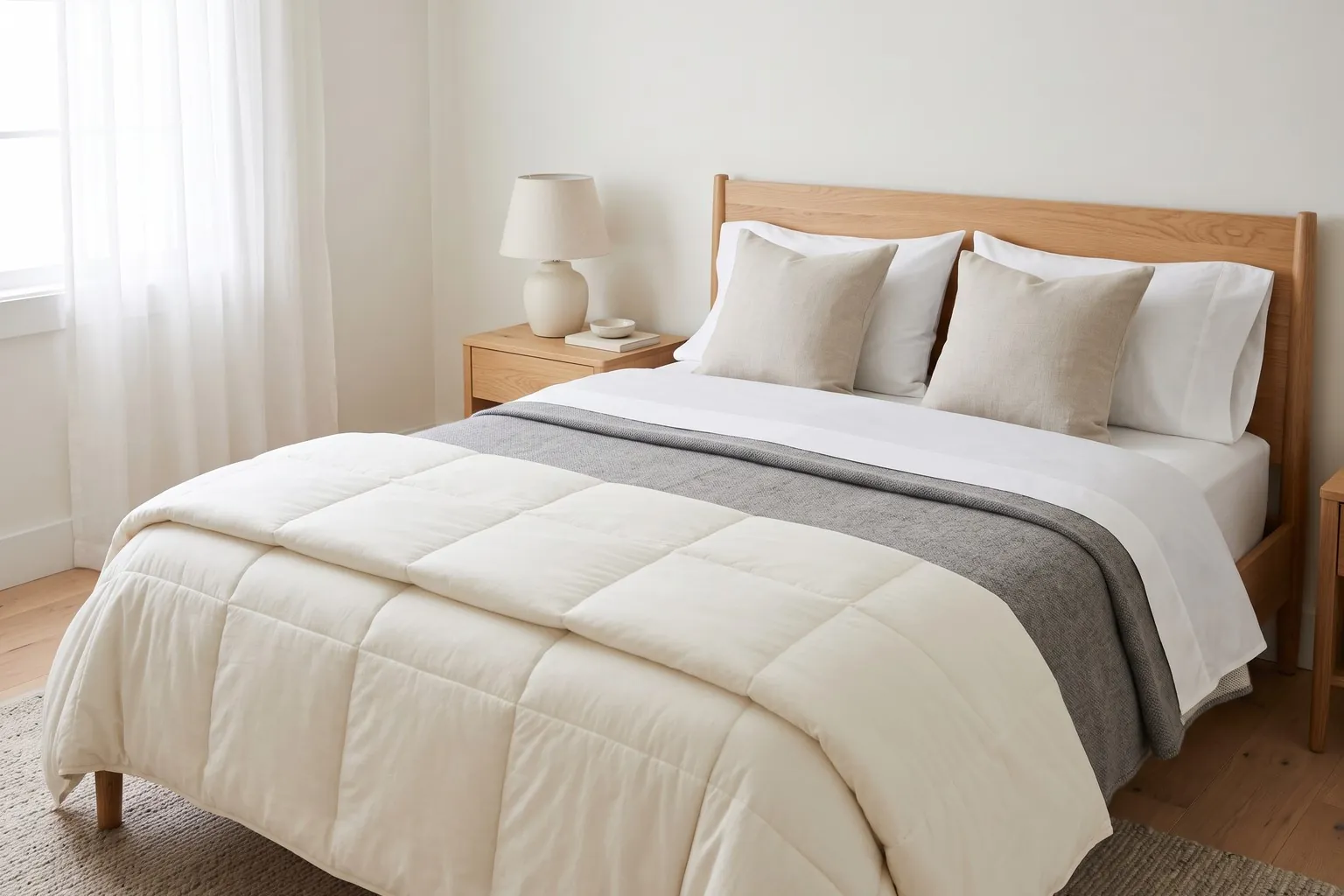
A quilt and a comforter do the same job, the top layer of a bed, and they are built in opposite ways. A quilt gets its warmth from a thin, even layer of batting held flat by stitching. A comforter gets it from loft: a fill that puffs up and traps air.
That difference decides the rest: warmth, weight, washing and how each is used. This guide takes them in that order. Sizes are in our guide to comforter sizes, and the third option, a duvet, is compared in duvet vs comforter. The whole bed is in our guide to bedding sizes.
Our sources are the Sleep Foundation and five bedding sellers: The Company Store, Pottery Barn Teen, Amerisleep, Saatva and Sleep Number.
How a quilt is made
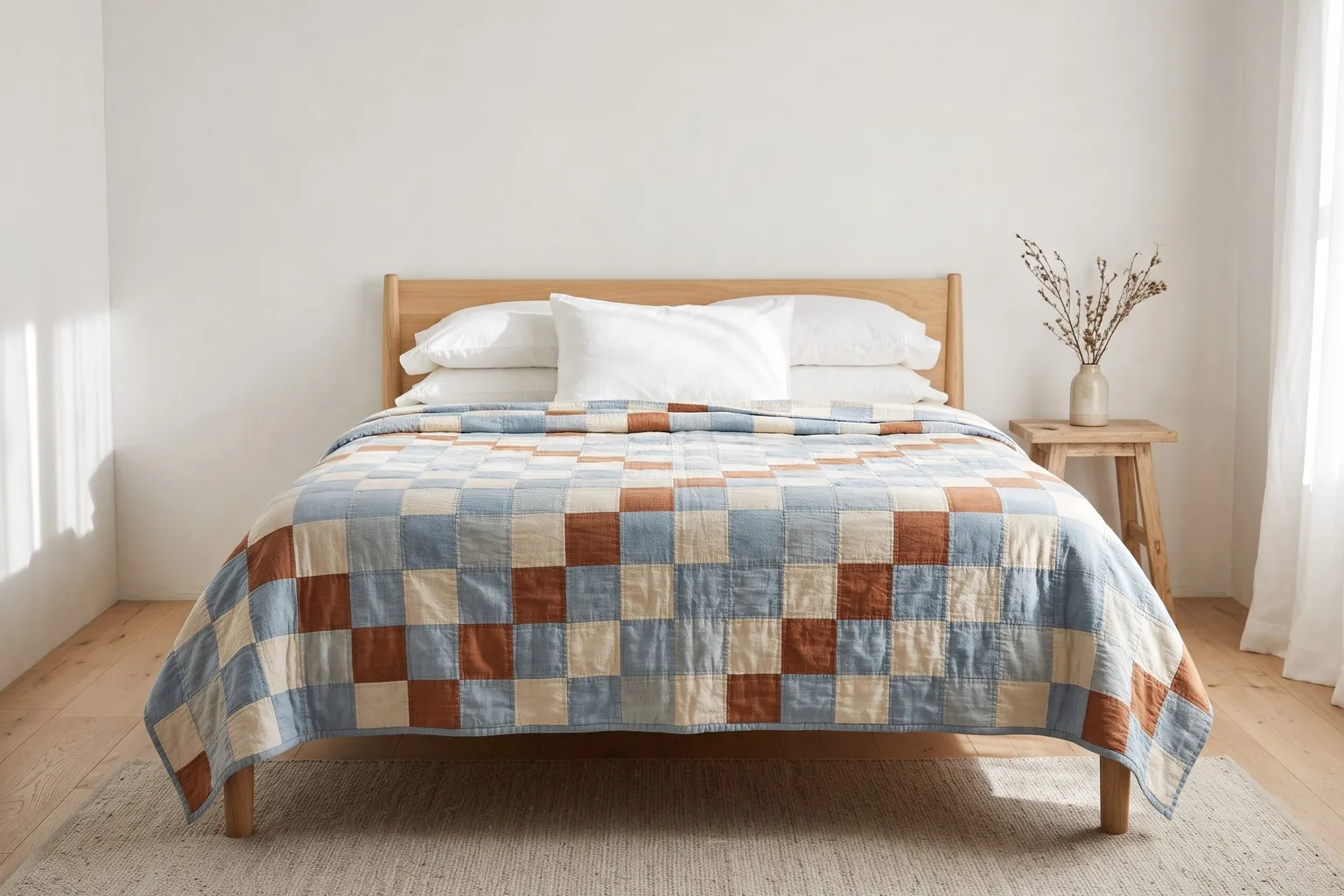
The Sleep Foundation defines quilts as multilayered blankets made by sandwiching a layer of batting between two layers of fabric. The Company Store names the three layers: a visible top, a visible bottom, and the inner insulating layer, the batting. Pottery Barn Teen adds the word for the stitching: when the three layers are stitched together at once, the technique is called quilting.
The batting. The Sleep Foundation says it is usually cotton, wool or down. Amerisleep says wool, polyester or a cotton-poly blend, typically 80 percent cotton and 20 percent polyester, and gives its thickness as one-eighth of an inch to about two inches.
The kinds. Amerisleep lists three: wholecloth or seamless, pieced, and appliqué. The Sleep Foundation names wholecloth and traditional patchwork.
How a comforter is made
The Sleep Foundation: two layers of a cotton or polyester blend, sewn together and packed with down, down alternative, cotton or wool. Its design may include chambers to keep the fill evenly spread.
Saatva and Pottery Barn Teen name the two ways those chambers are made.
| Construction | How it is made | Source |
|---|---|---|
| Sewn-through | the two large pieces of fabric are sewn together, creating pockets that hold the fill | Saatva |
| Baffle box | a thin strip of fabric is sewn between the two covers, creating a three-dimensional box that spreads the fill more evenly | Saatva |
Pottery Barn Teen explains the purpose of the baffle: extra fabric between the top and bottom layers gives the filling more space to expand. Saatva says baffle-box comforters tend to be warmer and fluffier than sewn-through ones.
Which is warmer
| Source | Quilt | Comforter |
|---|---|---|
| Sleep Foundation | generally thinner, may not be as warm | thicker than quilts, thinner than duvets |
| The Company Store | better for warm weather and hot sleepers | the go-to for colder months |
| Pottery Barn Teen | thinner, cooler; best for summer or hot climates | thicker, warmer; best for winter or cold climates |
| Saatva | thinner, lighter, cooler | warmer, heavier, fluffier |
| Sleep Number | moderate warmth | light to extra warm |
The agreement is broad: a comforter is the warmer of the two.
The fill changes the picture inside each type. Amerisleep says wool batting is fuller and fluffier and works best for colder climates, while 100 percent cotton batting is thin and best for mild to warm climates. Sleep Number says quilts give moderate warmth with cotton or polyester and more with wool. Saatva says down gives the most warmth among comforter fills and may not suit hot sleepers.
Which is heavier: the sources disagree
This is the one point where the sources contradict each other.
- Amerisleep: quilts feel heavier despite being thinner; comforters feel lightweight while providing more insulation.
- Sleep Number: quilts can feel heavier than a comforter because of thicker fabric and denser fill. Its table calls a quilt medium weight and a comforter lightweight.
- Pottery Barn Teen: a quilt typically feels more weighted, a comforter more light or cloudlike.
- Saatva: comforters are warmer, heavier and fluffier; quilts thinner and lighter.
Three of the four say the quilt feels heavier. Our reading: a quilt's weight is in dense fabric and batting lying flat on the body, a comforter's in air. If you like to feel the weight of the bedding, try both.
Which suits whom
Hot sleepers. The Sleep Foundation says quilts may be a good choice for hot sleepers, and that people in warmer climates may prefer them. Amerisleep: if you sleep hot or have night sweats, you may prefer a thin quilt.
Cold rooms. Pottery Barn Teen: in very cold weather, you may want a comforter. Amerisleep adds that to get enough warmth from a quilt in cold conditions, you may need to layer it with other blankets.
All year. The Sleep Foundation says the weight of a comforter makes it a good year-round choice for many sleepers, and that comforters may still need an extra blanket in colder months. Its quilts work well in warmer months and places with mild winters.
Body and position. Saatva sorts by sleeper: people with smaller frames toward a quilt, larger frames or those who like weight toward a comforter; side sleepers toward a comforter, back and stomach sleepers toward a quilt.
Washing
| Source | Quilt | Comforter |
|---|---|---|
| Sleep Foundation | some machine-washable, may need a large-capacity washer and dryer | often too bulky for a conventional washer and dryer |
| Pottery Barn Teen | usually fits a washing machine | some too bulky, may need professional care |
| Amerisleep | by hand or machine, warm water and mild detergent; laundromat if too large | down, silk or wool may need dry cleaning; queen or king to a laundromat |
| Sleep Number | cold water, delicate cycle; air-dry, or lowest dryer heat | gentle cycle, cold water, mild detergent; low heat with dryer balls; front-loading machines |
| Saatva | delicate and handmade quilts by hand, since a machine may fray the seams | tennis balls in the machine to reduce clumping |
The difference in practice: a quilt goes in a home machine more often, and a comforter goes to the laundromat more often.
How often. Saatva's rule applies to both: with a top sheet or a duvet cover, wash every two to three months; if it touches your skin every night, every two to four weeks.
The top sheet. Saatva says comforters can be used without a top sheet, and that a top sheet with a quilt is usually recommended.
Layering
The two are often used together.
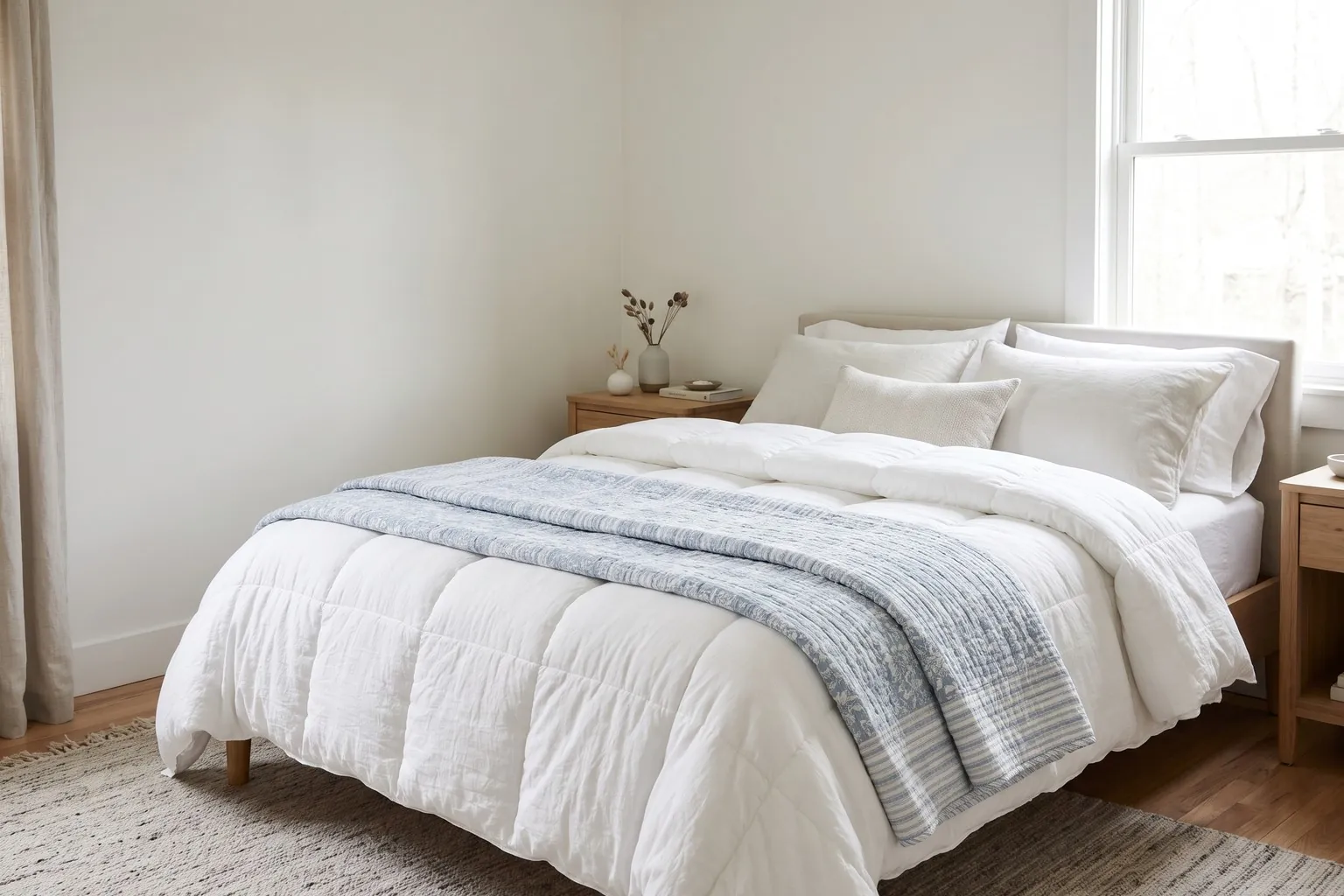
- Amerisleep: place a quilt over your comforter for extra warmth. But a heavy quilt will weigh down a fluffy down comforter and cause it to lose some of its height.
- Saatva: place the quilt underneath the comforter for insulation, or drape it over the top as a decorative accent.
- Pottery Barn Teen: quilts are popular for layered looks, with extra blankets or a quilt kept at the foot of the bed.
A practical reading of all three: the quilt under the comforter keeps the comforter's loft, and over it is mainly for looks. That is our combination of Amerisleep's caution and Saatva's two placements.
And the duvet
A duvet is the third choice, and the sources place it at the warm end.
- The Sleep Foundation: a duvet combines a separate insert and a cover, while a comforter has its cover built in. Duvets typically have the highest loft and give the most warmth. Comforters are thicker than quilts but thinner and less airy than duvets.
- Saatva: there is typically less stuffing in a comforter, which makes it slightly flatter and cooler than a duvet. A duvet is used with a cover for hygiene.
- On washing, the Sleep Foundation says a duvet insert used with a regularly washed cover only needs washing once or twice a year.
- On lifespan, it says duvets tend to last longer than both quilts and comforters, and that they can cost more, especially with down.
So on warmth the order runs quilt, comforter, duvet, by the Sleep Foundation's account. For summer, Amerisleep suggests a comforter with a lightweight, breathable shell and filling such as Tencel, cotton or microfiber. The full comparison with a comforter is in our duvet guide.
Choosing, in one table
Our summary of the sources above.
| If you | Choose | Why |
|---|---|---|
| sleep hot, or live somewhere warm | a quilt, cotton batting | thinner and cooler |
| sleep cold, or have cold winters | a comforter, or a duvet | thicker, warmer, more loft |
| want one cover all year | a comforter | a year-round choice for many, by the Sleep Foundation |
| like the feel of weight | a quilt | it feels heavier in three of four sources |
| wash at home in a standard machine | a quilt | it usually fits |
| want warmth you can adjust | a quilt and a comforter | add or remove the quilt |
Allergies. Sleep Number's advice applies to both: choose a non-allergenic fill and wash regularly.
Price and lifespan
Saatva gives the ranges: comforters from $50 to a few hundred dollars; machine-sewn quilts the same; handmade patchwork quilts $100 to $1,500. Pottery Barn Teen says comforters generally cost more than quilts because they use more material inside, and that handmade quilts cost more than machine-made ones.
On lifespan, the Sleep Foundation says comforters can go flat over time, and that machine-made wholecloth quilts hold up well to regular washing when made with quality materials.
Sizes
Quilts and comforters are sold by bed size. Sleep Number says quilts come in standard sizes from twin to king, and comforters in twin to king plus crib and throw sizes.
None of our quilt and comforter sources gives the inches. Our comforter sizes guide gives the comforter chart from five sellers, and our blanket sizes guide reports a quilt chart: a queen quilt of 90 by 95 inches, by Nectar's figures, against a queen comforter of 86 to 92 inches wide. The sizes are close, so one bed takes either at the same nominal size: our comparison of the two charts. The full quilt chart, from four makers, is in quilt sizes.
Before you buy, in six checks
- Decide the warmth: a quilt for warm rooms and hot sleepers, a comforter for cold ones.
- Check the fill: cotton batting is the coolest, wool and down the warmest.
- Check the construction: baffle box for even loft, sewn-through for less.
- Check your washer against the size of a comforter.
- Plan the top sheet: usually with a quilt, optional with a comforter.
- Plan the layers: quilt under the comforter to keep its loft.
Questions people ask
What is the difference between a quilt and a comforter?
Construction. A quilt is three thin layers, top, batting and back, stitched together. A comforter is a fabric shell packed with a lofty fill such as down or down alternative, so it is thicker and warmer.
Is a quilt warmer than a comforter?
No. Every source we read calls the comforter the warmer of the two. A quilt with wool batting is warmer than one with cotton batting.
Is a quilt heavier than a comforter?
Three of four sources say a quilt feels heavier despite being thinner, because of denser fabric and batting. One seller says the opposite.
Can you use a quilt and a comforter together?
Yes. A quilt under the comforter adds insulation; over it, it is mainly decorative. A heavy quilt on top can flatten a fluffy comforter.
Can you wash a comforter at home?
Often, if it fits. Many comforters are too bulky for a home washer and need a large-capacity machine. Down, silk or wool may need dry cleaning.
Is a quilt or a comforter better for summer?
A quilt. The sources call it thinner and cooler, best for warm months and hot sleepers, especially with cotton batting. A lightweight comforter is the other option.
Do you need a top sheet with a quilt?
Usually, according to Saatva. A comforter can be used without one. With a top sheet, wash either every two to three months.
Sources
- Quilt vs comforter vs duvet. Sleep Foundation, read November 2026
- The difference between a quilt and a comforter. The Company Store, read November 2026
- Quilt vs comforter. Pottery Barn Teen, read November 2026
- Quilt vs. comforter. Amerisleep, read November 2026
- Comforter vs quilt. Saatva, read November 2026
- Quilt vs comforter: which is right for you?. Sleep Number, read November 2026
Every figure in this guide comes from the sources above, or from arithmetic shown in the text. See our editorial policy.