Best decking material: wood, composite, PVC and aluminum compared
Pressure-treated pine lasts about 15 years, cedar about 20, composite 25 or more. Upkeep, heat underfoot, joist spacing and drawbacks of six decking materials.
The short answer
- This Old House gives pressure-treated pine about 15 years, cedar and redwood about 20, tropical hardwoods up to 25, and composite 25 or more. PVC and aluminum outlast them all.
- Wood asks for work: cedar and redwood are refinished about every three years. Composite and PVC need no staining or sealing.
- Composite and PVC cost more than wood and get hot in the sun, darker colors most of all. Composite also moves with temperature.
- The frame depends on the boards: composite sags if the joists are more than 16 inches apart, and 12 inches under diagonal boards.
- A warranty is not a lifespan. Makers quote 30 to 50 years of coverage. Read what the coverage is for.
In this guide
The boards are the part of a deck you see, touch and maintain. They are also the part you can choose most freely: the sizes of the frame come from tables, and the boards come from a catalog.
No material wins on every count. One is cheap and splinters, one is handsome and soft, one needs no finish and gets hot in the sun. This guide compares six materials on the points that differ: how long they last, what they ask of you each year, how they behave in sun and rain, and what they require of the frame. The frame itself is in our guides to how to build a deck and the floating deck.
One note on sources. Two of the pages we read belong to companies that sell decking: TimberTech makes composite and PVC boards, and Mataverde sells tropical hardwoods. Each is hardest on the other's product. We say which is which.
Six materials, side by side
The lifespans are This Old House's, from its guide updated in June 2026.
| Material | Lifespan | Upkeep | Main drawbacks |
|---|---|---|---|
| Pressure-treated pine | about 15 years with proper care | regular maintenance | can splinter, treated with chemicals |
| Cedar and redwood | around 20 years with proper maintenance | refinish about every three years | soft: scratches and dents, fades to gray |
| Tropical hardwood | up to 25 years | cleaning and a UV protectant oil | heavy, hard to work, sourcing |
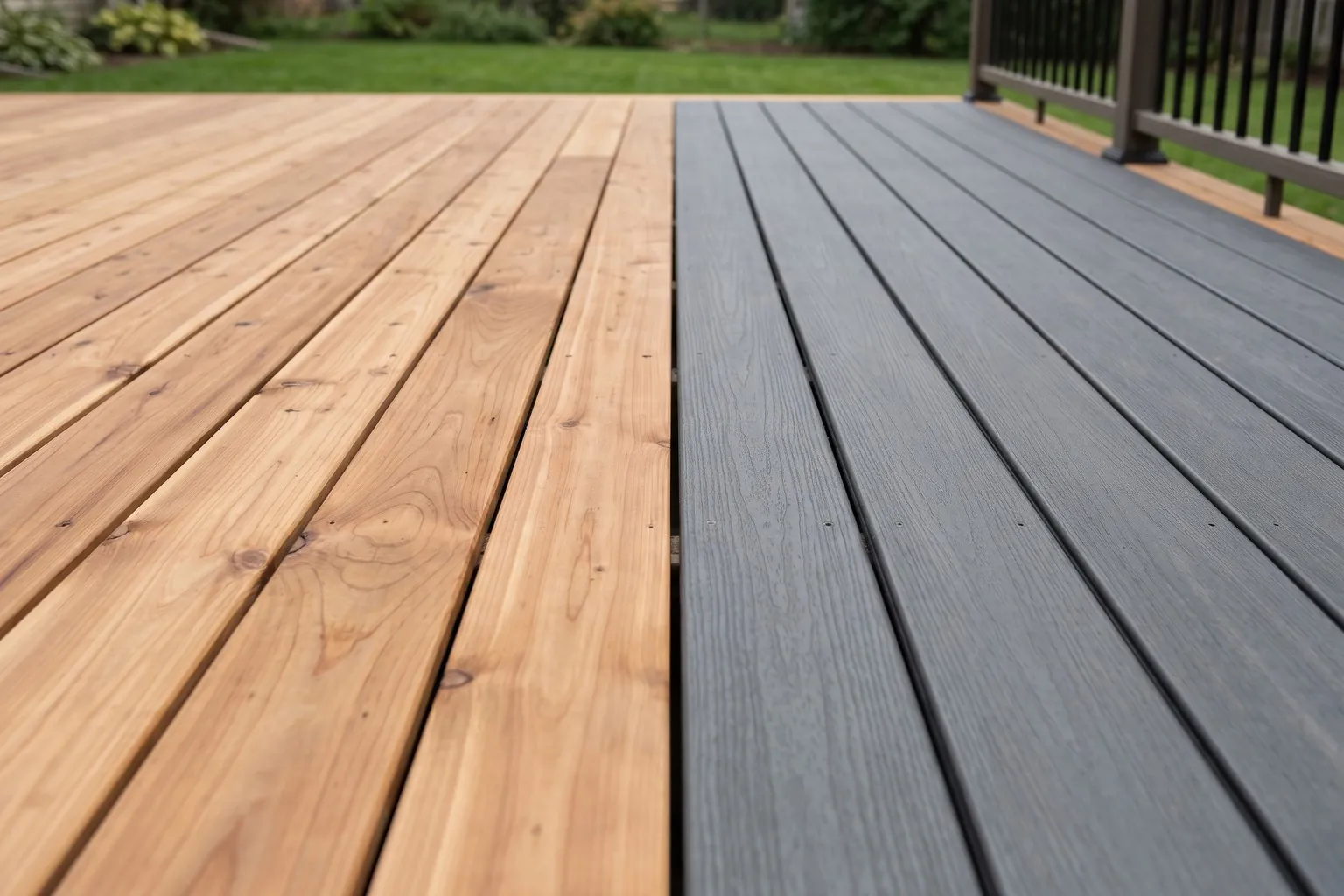
| Composite | 25 years or more with proper care | no staining or sealing | costs more, heavier, moves with temperature |
| Cellular PVC | can last a lifetime | minimal | more expensive still, slippery when wet |
| Aluminum | lasts virtually forever | not stated | the most expensive, noisy in rain |
TimberTech, the manufacturer, is less generous to wood: a wood deck will likely need to be replaced after 10 to 15 years. Mataverde, the hardwood seller, is more generous to its own product: typically 25 years and longer. The table uses the independent figure.
Pressure-treated pine
This is the least expensive deck board. This Old House describes it as southern yellow pine infused with preservative chemicals. TimberTech calls it one of the most cost-effective options.
Its weaknesses are well documented. This Old House lists them: it requires regular maintenance, and it can splinter if not properly cared for. TimberTech, selling the alternative, puts it more vividly: painful splinters in bare feet, warping and cracking, and regular sanding, sealing and staining.
Fifteen years is not a failure. It is what the cheapest material buys, on a deck that is looked after.
Treated lumber is not all the same. The American Wood Council's deck guide lists the species that are treated, southern pine, Douglas fir-larch, hem-fir, spruce-pine-fir, ponderosa pine and red pine among them, and separates two levels of treatment: above ground, and ground contact. Deck boards are an above ground use. Posts and anything touching soil need the ground contact grade. The tag stapled to the end of each board says which one it is, and it is worth reading before the lumber is loaded.
Cedar and redwood
These are the naturally durable softwoods. This Old House gives them around 20 years with proper maintenance, and describes the maintenance: about every three years, the deck is power-washed, sanded and refinished.
Two things come with the beauty. They are softwoods, and This Old House says they scratch and dent. And the sun fades their natural color to gray unless the finish is kept up.
The figures behind that softness are in our guide to the best wood for outdoor furniture: western red cedar measures 350 pounds on the Janka hardness scale and redwood 450, against 1,350 for white oak. The same guide reports that coast redwood is on the IUCN Red List as endangered, which is worth knowing before specifying it.
The American Wood Council's deck guide adds a condition for using these woods untreated: they count as naturally durable only when at least 90 percent of the board is heartwood.
Tropical hardwoods
Ipe, cumaru and red balau are the woods at the other end of the scale. This Old House gives them up to 25 years. Mataverde gives 25 years and longer, and calls them incredibly resistant to scratches.
The hardness that protects them makes them difficult. This Old House lists the costs: heavy and difficult to work with, and they may require predrilling for fasteners. Mataverde tells installers to use carbide saw blades and drill bits. In our outdoor wood guide, ipe measures 3,490 pounds of hardness and 65.5 pounds per cubic foot, nearly three times the weight of cedar.
Upkeep is lighter than for cedar and not zero. Mataverde describes it as regular cleaning and reapplying an oil-based UV protectant.
Sourcing is the open question. This Old House states it flatly: most of these woods come from endangered tropical rainforests. Mataverde answers that its own stock is certified sustainable and responsibly sourced. For tropical wood, ask for the certificate.
Composite
This Old House describes composite as a blend of recycled plastic and wood fibers, lasting 25 years or more, with no need for staining or sealing.
There are two kinds, and the difference matters.
- Uncapped composite is the blend all the way through. This Old House calls it prone to staining and fading. Mataverde says it is susceptible to moisture, mold growth and flaking.
- Capped composite has a protective plastic shell around the core. TimberTech describes its own cap as wrapping around the entire board.
The drawbacks are consistent across the sources, including the one that sells it.
- Cost and weight. More expensive and heavier than wood, according to This Old House.
- Movement. Composites move more in response to changes in temperature. Mataverde says the boards expand in hot weather and shrink in cold.
- Heat. TimberTech's own page says composite can get hot in the sun, especially in darker colors.
- Scratches. Mataverde makes the point that scratches and gouges in composite cannot be sanded out. A wood board can be sanded; a damaged composite board cannot.
- Support. This Old House warns that composites will sag if joists are spaced wider than 16 inches on center.
Cellular PVC
PVC decking has no wood in it at all. This Old House describes it as made entirely from plastic, and says it can last a lifetime with minimal maintenance. TimberTech, which makes it, describes a blend of polymers capped on three or four sides, and says it is the best material for resisting mold and mildew.
The price of that is literal. This Old House lists it as more expensive than wood or composite, and TimberTech as usually one of the more expensive options. This Old House adds that it can become slippery when wet.
On heat, TimberTech claims its PVC stays cooler than composite, and then prints the caution that applies to every board on this page: all decking products will get hot in the sun.
Aluminum
Aluminum has the longest life in the table. This Old House calls aluminum decking lighter and stronger than wood, composite and vinyl, fire-resistant, recyclable, and able to last virtually forever. It recommends it for high moisture or extreme weather.
Two drawbacks: it is the most expensive decking option, and it can be noisy during rainfall.
Heat underfoot
For a deck in full sun, this can decide the choice, and no source we read gives a temperature. What they give is a ranking of sorts.
TimberTech says composite gets hot, darker colors most. It says PVC stays cooler and still gets hot. Mataverde says composite may feel hot underfoot in direct sunlight.
The sources point to one answer, a lighter color. Shade is the other: our guide to pergola sizes covers it.
What each material asks of the frame
The boards and the joists are chosen together.
Joist spacing. Sixteen inches on center is the limit for most composite, and 12 inches under boards laid at an angle. Wood decking of 2 inch nominal thickness can cross wider gaps where the span table allows. The figures are in our guide to deck joist spacing.
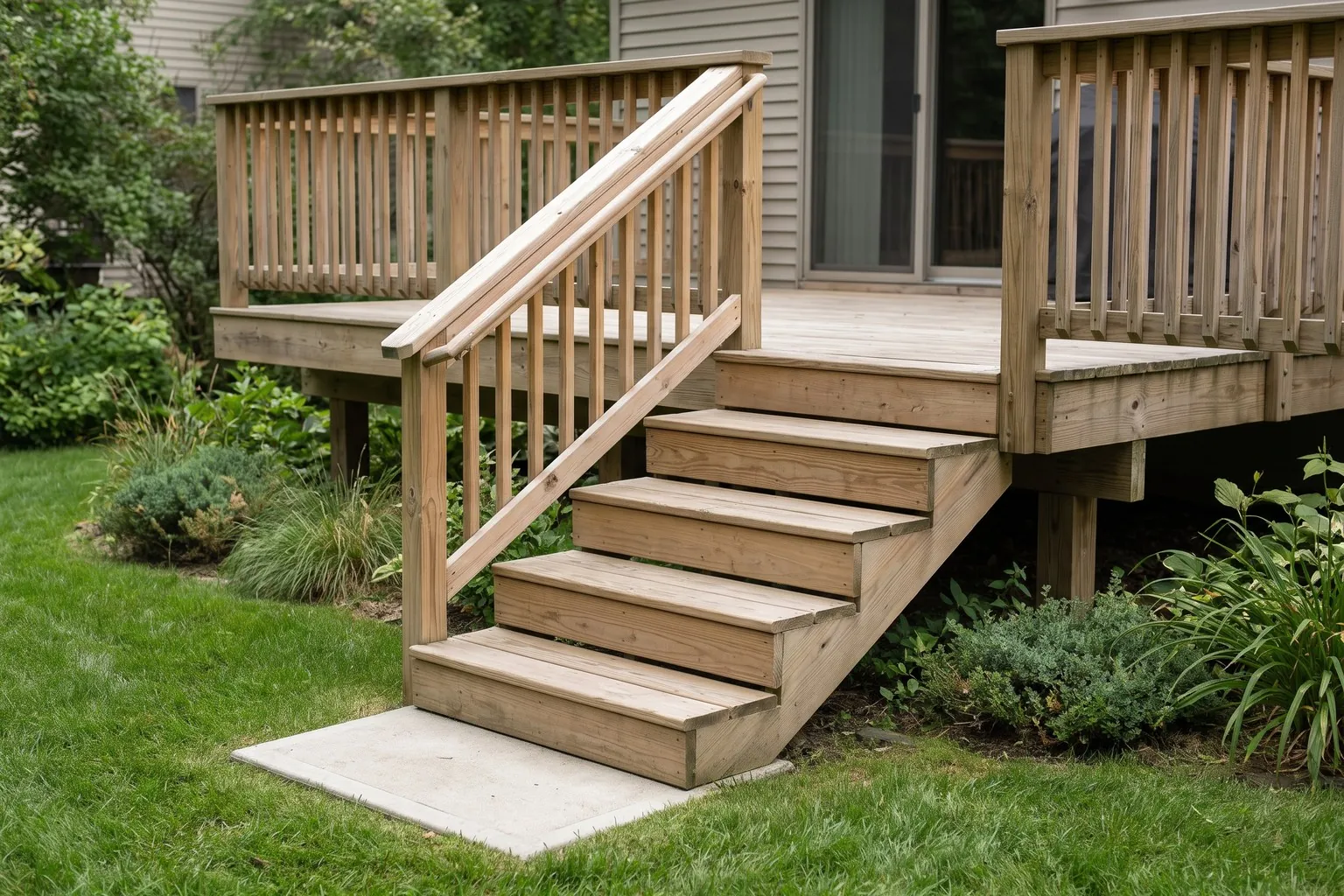
Stairs. Composite treads need more stringers than wood ones: Decks.com gives 12 inches or even 9 inches on center. See deck stairs.
Fastening. The American Wood Council's guide fastens wood decking with two screws or nails at every joist and spaces the boards about 1/8 inch apart. This Old House keeps screws in composite about 3/4 inch from ends and edges. TimberTech fixes its boards with top-down screws or hidden clips, and advises keeping the boards cool before fastening to limit gapping.
What the code accepts. The council's guide allows dimension lumber or span rated decking. Other products may be substituted when the local authority has approved them.
A warranty is not a lifespan
TimberTech quotes warranty coverage of up to 30 years or more for composite and up to 50 years or more for PVC, and fade and stain warranties from 25 to 50 years. Those are large numbers beside This Old House's 25 years or more.
They measure different things. A lifespan is how long the deck is usable. A warranty is a promise about particular defects under the maker's conditions. Read what is covered, for how long, and what the conditions are.
What goes into them
For buyers who weigh this, the sources give three facts.
- Composite is made from recycled plastic and wood fibers. TimberTech says its PVC boards contain up to 60 percent recycled material.
- Aluminum is recyclable.
- Pressure-treated lumber contains preservative chemicals, and This Old House warns that they may be harmful if inhaled, which is a caution for whoever saws it.
Tropical hardwood is the case where the certificate matters most, as above.
Choosing, in five questions
- How much work? No finishing: composite, PVC or aluminum. Cleaning and oil: hardwood. Refinishing about every three years: cedar and redwood. Regular maintenance: treated pine.
- How much sun? Full sun argues for light colors and against dark composite.
- How long will you stay? Fifteen years of pine may be all you need. Twenty-five and more is what composite and PVC are for.
- What is the frame? Joists at 16 inches take anything. Wider than that, check the board.
- Bare feet and children? Splinters are the point to check on pine, and slipperiness when wet on PVC.
Questions people ask
What is the longest lasting decking material?
Aluminum, which This Old House says can last virtually forever, then cellular PVC, which can last a lifetime. Composite lasts 25 years or more and tropical hardwoods up to 25.
Is composite decking better than wood?
It lasts longer and needs no staining or sealing. It costs more, weighs more, moves with temperature, gets hot in the sun and cannot be sanded when scratched. Wood is cheaper and needs regular refinishing.
How long does a pressure-treated deck last?
About 15 years with proper care, according to This Old House. TimberTech, which makes composite, says 10 to 15.
Does composite decking get hot?
Yes. TimberTech's own guide says composite can get hot in the sun, especially in darker colors, and that all decking products get hot in the sun.
What is the difference between composite and PVC decking?
Composite is a blend of recycled plastic and wood fibers. PVC is entirely plastic. PVC costs more, resists mold best, and can be slippery when wet.
What joist spacing does composite decking need?
16 inches on center at most for boards laid straight and 12 inches for boards laid at an angle. This Old House warns that composites sag over wider gaps.
Sources
- Decking materials: composite, wood or plastic?. This Old House, read November 2026
- The 4 best deck material options for 2026. TimberTech, read November 2026
- How to choose the right decking material for your climate. Mataverde, read November 2026
- Prescriptive Residential Wood Deck Construction Guide, DCA 6. American Wood Council, copy published by the Town of Geneseo, New York, read November 2026
- Deck joist sizing and spacing. Decks.com, read November 2026
- How to build a deck. TimberTech, read November 2026
- Ipe. The Wood Database, read November 2026
- Western red cedar. The Wood Database, read November 2026
- Coast redwood. The Wood Database, read November 2026
Every figure in this guide comes from the sources above, or from arithmetic shown in the text. See our editorial policy.