Bench height and chair seat height: why almost every seat is 18 inches
A chair seat is 17 to 19 inches from the floor, and so is a bench. Seat heights for dining, lounge, counter and bar, plus bench depth and length by use.
The short answer
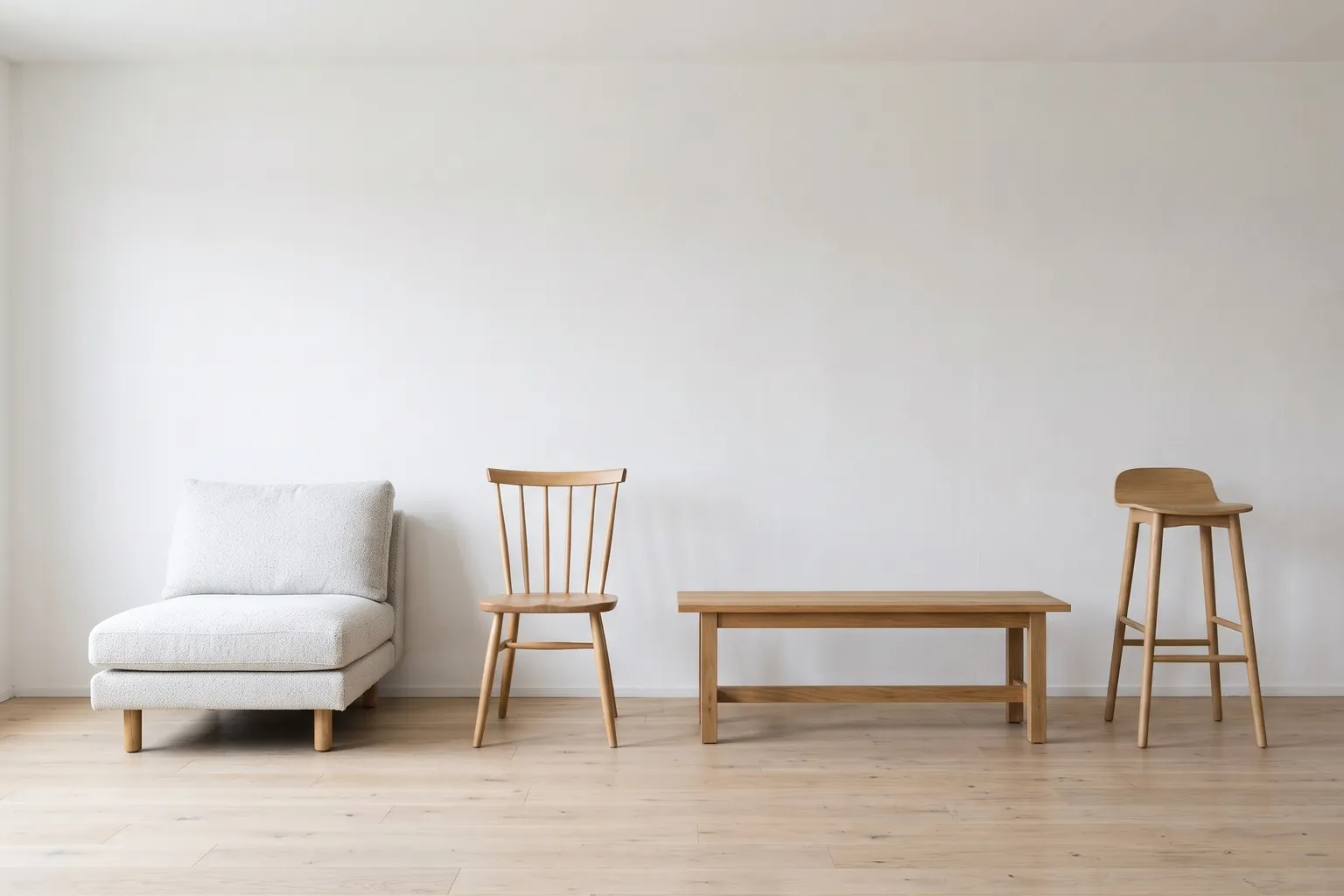
- A standard chair seat is 17 to 19 inches from the floor, with 18 the usual figure. A dining bench is the same.
- The ADA Standards set the same range for an accessible bench: 17 to 19 inches high, at least 42 inches long and 20 to 24 inches deep.
- Lounge chairs sit lower, at 15 to 18 inches. Counter stools are 24 to 26 inches and bar stools 28 to 30.
- A dining seat is 16 to 18 inches deep and 16 to 20 wide. Bench depth runs from 14 inches in an entryway to 20 on a patio.
- Allow 20 to 24 inches of bench for each adult, and choose a dining bench 6 to 12 inches shorter than the table.
In this guide
Sit on a dining chair, a hall bench and a garden bench in turn, and your feet land in the same place each time. Furniture makers do not agree on much, but they agree on the height of a seat.
The number is 18 inches. This guide shows where it comes from, which seats break the rule on purpose, and what else a bench needs to get right: its depth, and its length.
The standard: 17 to 19 inches
| Source | Seat height | For |
|---|---|---|
| Adorno | 17 to 19 in, with 18 the usual figure | A standard chair |
| Bassett | Usually 18 in | A dining chair |
| Eureka Ergonomic | 18 to 20 in | A dining chair at a 28 to 30 in table |
| Hernest | 18 to 20 in | A dining chair |
| Polywood | 16 to 20 in on average | Outdoor dining chairs |
| Groen's Fine Furniture | 17 to 19 in | A dining bench |
| Hartville Outdoor Products | Around 18 in | Most benches |
| ADA Standards, section 903.5 | 17 in minimum, 19 in maximum | An accessible bench |
The measurement is always the same one: from the floor to the top of the seat.
The last row is worth a second look. The ADA Standards are written for public buildings, not for private homes, and they are the result of deciding what height people of different sizes and abilities can sit down on and get up from. They arrive at the same 17 to 19 inches as the furniture trade.
Where 18 inches comes from
The seat is set by the lower leg.
OSHA's guidance for office chairs describes the right height without a number: the chair is at the right height when the entire sole of the foot rests on the floor, with the back of the knee slightly higher than the seat. The Canadian Centre for Occupational Health and Safety gives a way to find it standing up: adjust the chair until the highest point of the seat is just below your kneecap.
For most adults that lands between 16 and 20 inches. Omni Calculator gives 16 to 20 as the range to expect for a chair, and works an example for a person of 5 feet 7 in shoes: a seat of 16.5 to 18 inches.
So the 18 inch seat is a compromise that fits the middle of the population. It is a little high for a short person and a little low for a tall one. OMHU makes the first point about sofas: on a seat that is too high, short legs dangle.
To find your own seat height, sit on something firm with your feet flat and your knees at a right angle, and measure from the floor to the crease behind your knee. Your seat should be at that height or slightly under it. If you are choosing chairs for one person, use that number. If you are choosing for a table of guests, use 18.
Seat height by type
Not every seat is meant for sitting upright at a table. Lower seats tilt you back, and higher ones meet higher tables.
| Seat | Height | Who gives it |
|---|---|---|
| Lounge chair | 15 to 16 in | Adorno |
| Lounge or accent chair | 16 to 18 in | Hernest |
| Slipper chair | 15 to 17 in | HomeFurnishings.com |
| Sofa | 17 to 19 in | Hernest; OMHU gives 17 to 20 |
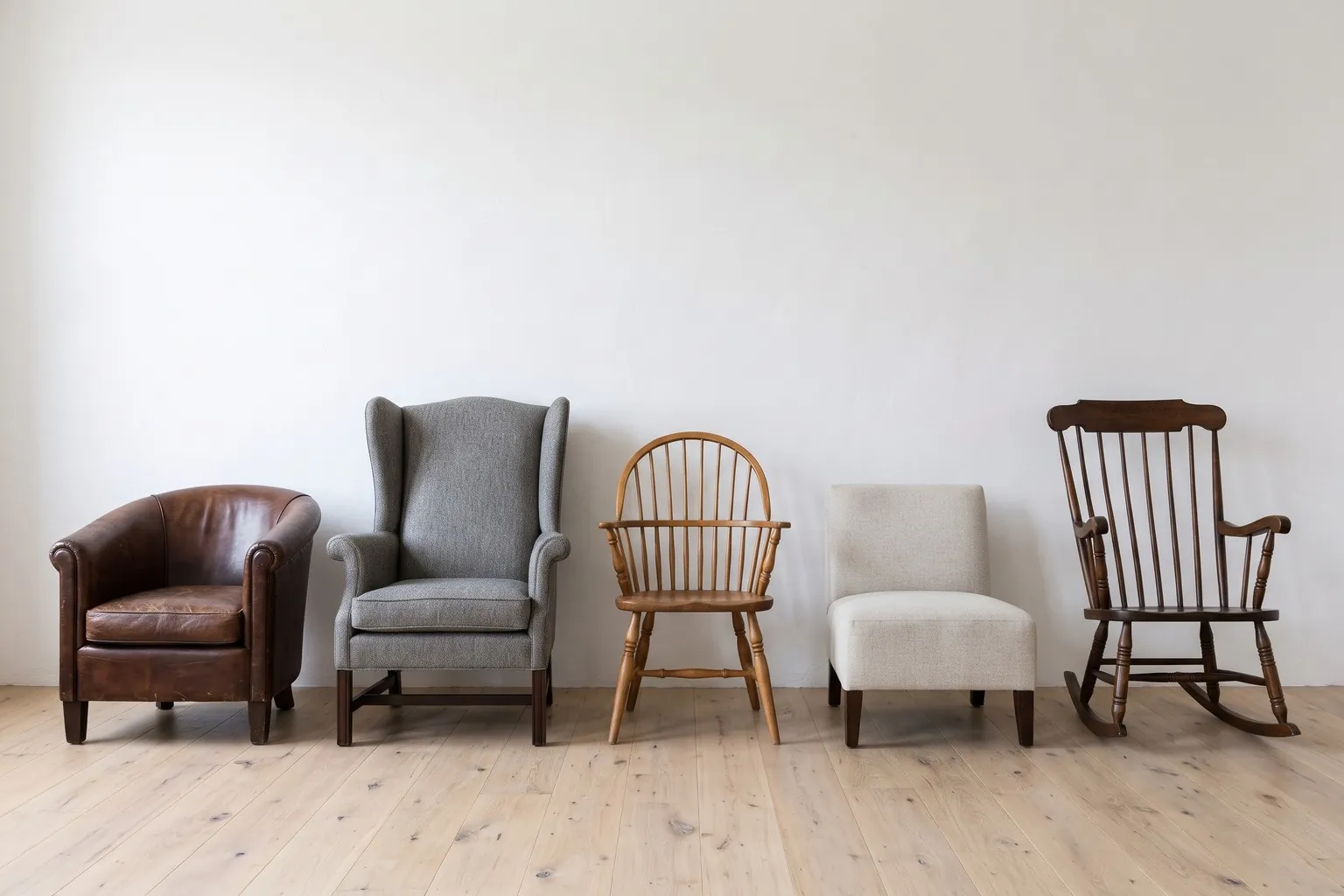
| Dining chair, side chair | 17 to 19 in, or 18 to 20 | Adorno; Eureka Ergonomic and Hernest |
| Desk chair | 16 to 20 in, adjustable | Omni Calculator |
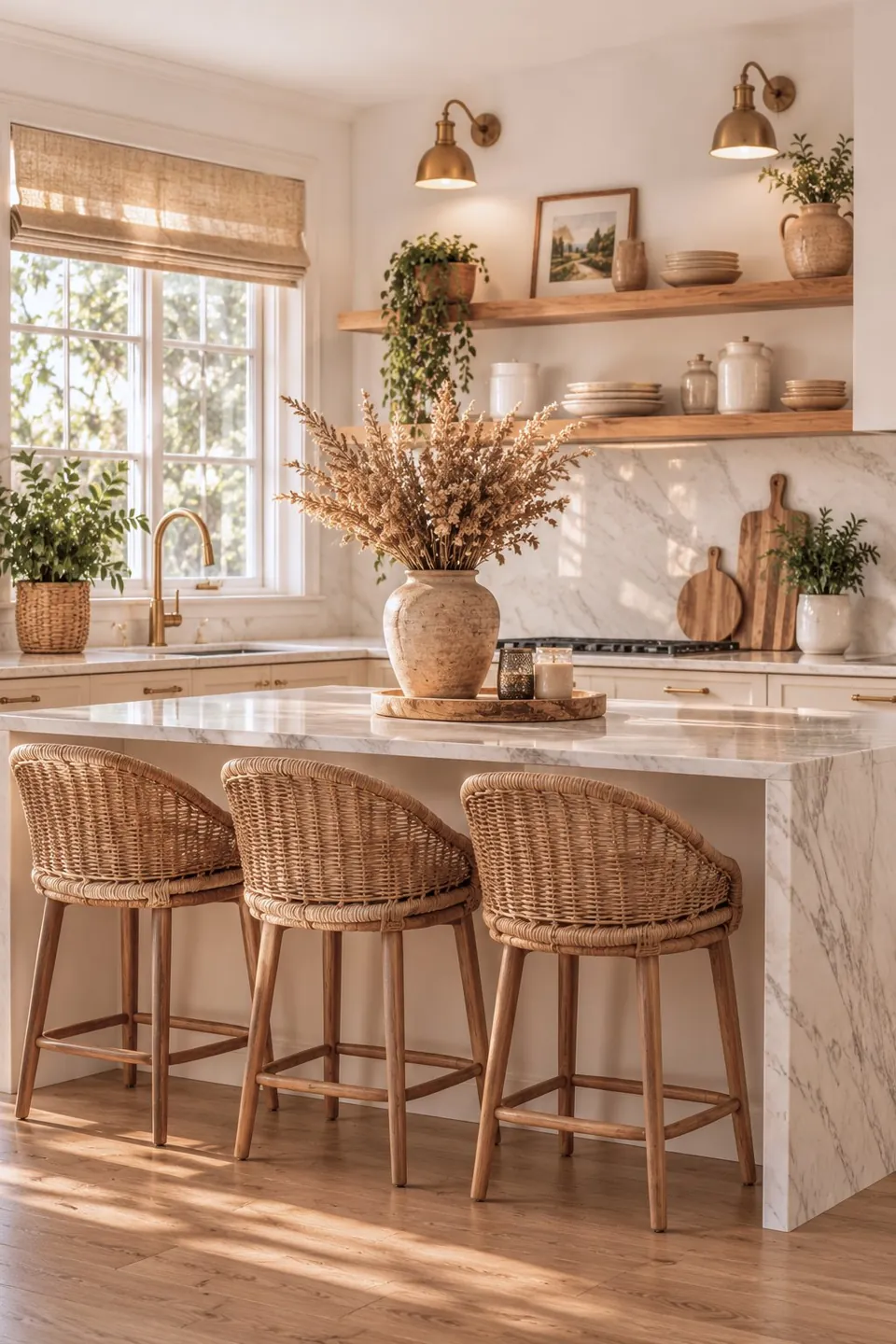
| Counter stool | 24 to 26 in | Adorno and Hernest |
| Bar stool | 28 to 30 in | Adorno and Hernest |
Adorno explains the lower figure for lounge chairs in terms of posture: the seat is lower, the seat is deeper at 22 to 24 inches, and the back is raked. It adds that such a chair cannot double as a dining chair. That is the practical point of the table. A chair from one row will not work at a table meant for another.
Adorno also marks the upper boundary. Above about 22 inches, in its words, the sitter perches. That is what a stool is for.
The seat and the table
A seat height means little without the table it goes with. The rule that links them is a gap of 10 to 12 inches between the seat and the table, given by Castlery, Eureka Ergonomic, Hernest and Adorno alike.
| Table or counter | Height | Seat |
|---|---|---|
| Dining table | 28 to 30 in | 17 to 19 in |
| Kitchen counter | 34 to 36 in | 24 to 26 in |
| Bar | 40 to 42 in | 28 to 30 in |
The counter and bar rows are Adorno's pairings. The sums behind the first row, pairing by pairing, are in our guide to dining table height, and the stool rows are worked out in bar stool height. The seats themselves are named and told apart in types of chairs.
Seat depth and width
Height gets you onto the chair. Depth and width decide how long you stay.
Depth. Eureka Ergonomic and Hernest both give 16 to 18 inches for a dining chair. Hernest adds how to test it: seated upright, there should be about 2 to 4 inches of space between the back of your knees and the edge of the seat. The Canadian agency's version of the same test is a clenched fist, about 2 inches.
Groen's Fine Furniture gives the method from the other direction. Measure from the back of your hips to the back of your knee while seated, then subtract about two inches. That is the deepest seat that still lets you use the backrest.
Lounge seating is deeper on purpose. Adorno gives 22 to 24 inches for a lounge chair, and HomeFurnishings.com the same for a club chair.
Width. Eureka Ergonomic and Hernest give 16 to 20 inches for the seat of a dining chair. Adorno gives the width of the chair itself: 18 to 20 inches, and 22 or more with arms.
Arms. Eureka Ergonomic puts armrests 7 to 9 inches above the seat. On an 18 inch seat that is 25 to 27 inches from the floor, which is the figure to compare with the underside of the table.
Backs and spacing. Eureka Ergonomic gives the backrest of a dining chair as 12 to 20 inches high, leaning back 10 to 15 degrees, and suggests at least 6 inches between one chair and the next. Hernest puts the overall height of a dining chair at 30 to 36 inches, which is the figure to check if the chairs have to tuck under a windowsill or a counter overhang.
Bench height
A bench is a seat for more than one person, and its height follows the chair. Groen's gives 17 to 19 inches for a dining bench. Hartville Outdoor Products says most benches are built around 18 inches high. The ADA Standards require 17 to 19.
A bench size chart published by Alan Moss breaks the height down by use, with small differences.
| Bench | Seat height | Depth | Length |
|---|---|---|---|
| Dining | 17 to 19 in | 14 to 18 in | 48 to 72 in |
| Entryway | 18 in | 14 to 16 in | 36 to 48 in |
| Foot of the bed | 18 to 20 in | 16 to 18 in | 48 to 60 in |
| Outdoor or garden | 16 to 18 in | 18 to 20 in | 48 to 72 in |
Read the last two rows against the first. The bench at the foot of a bed is a little higher. The outdoor bench is a little lower and deeper, closer to a lounge chair than to a dining chair.
At a dining table the bench has to obey the same gap as a chair: 10 to 12 inches under the table. A dining bench with a thick cushion on top can end up an inch or two too high, so measure it with the cushion.
Bench depth, by use
Depth is where benches differ most, because some are for perching and some are for staying.
| Bench | Depth, per Groen's | Depth, per Hartville |
|---|---|---|
| Entryway or mudroom | 14 to 17 in | 14 to 17 in |
| Dining | 16 to 18 in | 16 to 18 in |
| Outdoor | 15 to 18 in | 18 to 20 in |
| Kitchen banquette | 17 to 20 in | |
| Lounge or window seat | 19 to 24 in | |
| Storage bench | 15 to 18 in |
Hartville adds a rule that explains the spread: a bench with a backrest is deeper, 18 to 20 inches, and a backless one shallower, 15 to 17. With a back to lean on you sit further into the seat. Without one you sit on the front half.
The ADA figure for an accessible bench, 20 to 24 inches deep, is at the deep end of the home benches above. The Standards also call for back support at least 42 inches long.
For an entryway there is one more number. Groen's advises leaving at least 36 inches of clear walking space in front of the bench, which in a narrow hall is the reason to choose 14 inches of depth over 17.
Bench length: how many it seats
Alan Moss's chart allows approximately 20 to 24 inches of seat for each adult, and 24 at a dining table. That last figure is the same 24 inches of table edge per person used in our guide to dining table size.
| Bench length | Adults, at 24 in each | Adults, at 20 in each |
|---|---|---|
| 42 in | 1, with room to spare | 2 |
| 48 in | 2 | 2 |
| 60 in | 2 | 3 |
| 72 in | 3 | 3 |
These are our own sums. The first row is the ADA minimum length for an accessible bench.
For a dining bench, Alan Moss gives a rule against the table: choose a bench 6 to 12 inches shorter than the table. A shorter bench can also be pushed under the table when it is not in use. Check that against your own table by measuring between the legs, since a bench that is shorter than the top can still be longer than the space between the legs.
A bench has one real advantage over chairs at a table, which is that the number of seats is not fixed. Three adults or four children fit the same 72 inches.
How to measure a seat you are buying
- Height: from the floor to the top of the seat, at the front edge. On a cushioned seat, measure with someone sitting on it.
- Depth: from the front edge of the seat to the backrest.
- Width: across the seat at its widest point, and across the arms if there are any.
- Arm height: from the floor to the top of the arm.
Then check them in this order.
- The seat against the table: 10 to 12 inches of gap.
- The seat against the sitter: feet flat on the floor.
- The depth against the sitter: 2 to 4 inches behind the knee.
- The width against the table: 24 inches of table edge for each chair.
Questions people ask
What is the standard seat height of a chair?
17 to 19 inches from the floor to the top of the seat, with 18 the usual figure, according to Adorno. Eureka Ergonomic and Hernest give 18 to 20 inches for dining chairs.
What is the standard height of a bench?
The same as a chair. Groen's gives 17 to 19 inches for a dining bench, Hartville says most benches are built around 18 inches, and the ADA Standards set 17 to 19 inches for an accessible bench.
How deep should a bench be?
14 to 17 inches in an entryway, 16 to 18 at a dining table, and 18 to 20 for an outdoor bench with a back, according to Groen's and Hartville.
How long should a dining bench be?
Allow 24 inches for each adult, and choose a bench 6 to 12 inches shorter than the table, per the Alan Moss chart. A 72 inch bench seats three adults.
How high should a chair be for a 30 inch table?
18 to 20 inches, which leaves the 10 to 12 inches between seat and table that Castlery and Eureka Ergonomic recommend.
Sources
- ADA Accessibility Standards, sections 902 and 903. U.S. Access Board, read November 2026
- Types of chairs: how to tell them apart. Adorno, read November 2026
- Dining chair size guide. Eureka Ergonomic, read November 2026
- Dining chair height guide. Hernest, read November 2026
- The ultimate guide to bench seat depth. Groen's Fine Furniture, read November 2026
- How deep should a bench seat be. Hartville Outdoor Products, read November 2026
- Bench size chart. Alan Moss, read November 2026
- Computer workstations: chairs. Occupational Safety and Health Administration, read November 2026
- How to adjust office chairs. Canadian Centre for Occupational Health and Safety, read November 2026
- Desk height calculator. Omni Calculator, read November 2026
- Accent chair styles guide. HomeFurnishings.com, read November 2026
- Standard size of a dining table. Bassett Furniture, read November 2026
- Bar height vs. counter height furniture: a buying guide. Polywood, read November 2026
- Key dining table measurements. Castlery, read November 2026
- Standard sofa dimensions. OMHU, read November 2026
Every figure in this guide comes from the sources above, or from arithmetic shown in the text. See our editorial policy.